The Return of Spheres of Influence
The vocabulary of spheres of influence never really left international politics. It is returning to the surface — and with it, hard questions about sovereignty and consent.
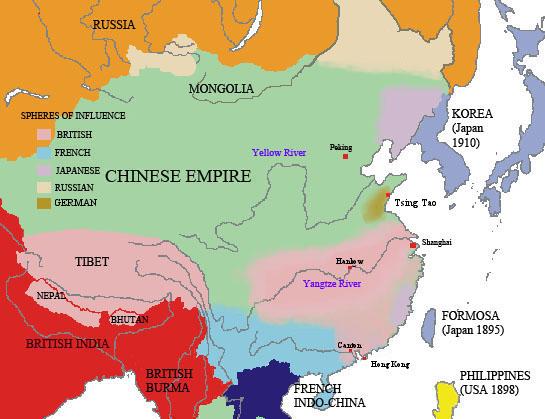
For three decades after the Cold War, Western capitals treated the phrase "sphere of influence" as an anachronism — the language of a world that liberal institutions had supposedly rendered obsolete. That confidence now looks premature. From the Black Sea to the South China Sea, great powers are again asserting privileged claims over their neighbourhoods, and smaller states are again discovering how little their formal sovereignty weighs against a determined patron next door.
The uncomfortable truth is that the concept never disappeared; it simply went unspoken. Even at the height of the unipolar moment, the strong shaped the choices of the weak through finance, basing rights and the quiet machinery of preference. What has changed is not the practice but the willingness to name it, and to defend it openly as a right rather than exercise it discreetly as a habit.
What a sphere actually is
A sphere of influence is not an empire. It is a claim to veto the external alignments of weaker states without formally governing them. The distinction matters, because it explains why spheres are so durable: they are cheaper than conquest and easier to deny. A great power need not occupy a country to hollow out its choices — it need only make the cost of the wrong alignment unbearable.
This is why the concept resists the moral clarity we would like to bring to it. The states inside a sphere are rarely given a clean choice between freedom and domination. They are offered a spectrum of accommodation, and they calibrate their position along it, trading autonomy for security or prosperity in increments too small to trigger a crisis.
The consent problem
The deepest objection to spheres of influence is not strategic but moral: they treat the preferences of small nations as negotiable between larger ones. When two capitals agree on where a line runs, the people on the wrong side of it are informed rather than consulted. That is the grievance that outlives every settlement.
Yet pretending spheres do not exist has its own costs. Policies built on the fiction that every state is equally free to choose invite exactly the miscalculations that end in war. The task for diplomacy is not to abolish the gravitational pull of great powers but to keep it from hardening into the right of conquest.
Living with gravity
If spheres cannot be wished away, they can at least be disciplined. The difference between a tolerable order and an intolerable one lies in whether the strong accept limits on what their proximity entitles them to demand. A neighbour's influence over trade and security posture is one thing; a veto over a country's constitution and its right to exist is another entirely.
The states most exposed to this pressure have learned to buy insurance through multiplicity — diversifying their partners, embedding themselves in institutions, and making themselves useful enough to more than one patron that no single one can dictate terms. Sovereignty, in this reading, is less a legal status than a portfolio to be actively managed.
The view from the smaller capital
It is worth remembering that the states inside a sphere are not merely objects of great-power calculation; they are agents with strategies of their own. Some extract remarkable concessions from their patrons by threatening to defect. Others cultivate distant powers as a counterweight, importing a rival's influence precisely to dilute the one next door. Proximity is a constraint, but it is rarely a cage.
The history of the twentieth century is full of supposedly captive states that outmanoeuvred their protectors, played blocs against each other, and won room to breathe that no map would have predicted. That agency is easy to miss from the vantage of the capitals doing the dominating, and it is exactly what a durable settlement has to leave space for.
The honest position is uncomfortable. A stable order will have to acknowledge that power concentrates and that geography is destiny more often than we admit — while insisting, without illusion, that acknowledgement is not the same as endorsement, and that the line between influence and domination is exactly where diplomacy must plant its flag.
Ali
Editor of Diplomatic Oak, writing on geopolitics, foreign policy and the craft of diplomacy.