
The Indo-Pacific and the Art of Deterrence Without Encirclement
Managing competition in Asia requires the hardest thing in statecraft: firmness that does not foreclose accommodation.
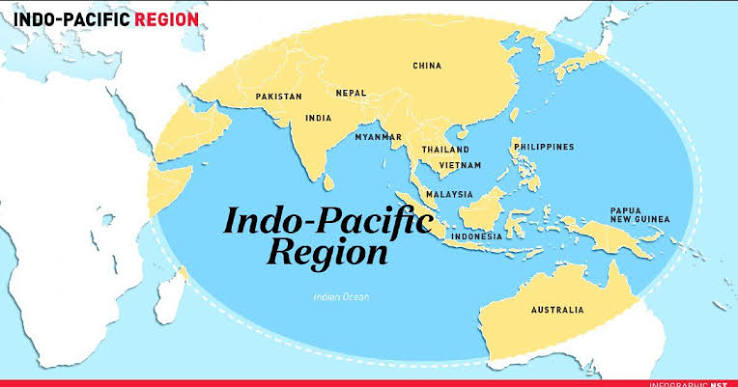
The Indo-Pacific has become the theatre in which the central question of contemporary geopolitics will be answered: can a rising power and an established one compete intensely without stumbling into catastrophe? The region concentrates the world's trade, its fastest-growing militaries and its most dangerous flashpoints into a single strategic space where every move is read as a signal.
What makes the region so combustible is not any single dispute but the density of them, laid over sea lanes that carry a decisive share of global commerce. A miscalculation over a reef or a strait does not stay local; it ripples through supply chains and alliance commitments until a minor incident is carrying far more weight than its origins would suggest. The result is a region where the smallest tactical encounter can escalate through channels no one fully controls, which is why the professionals spend so much of their energy on the unglamorous business of managing incidents before they harden into crises.
The dilemma of the deterrer
Deterrence and provocation are separated by a line that exists mostly in the perception of the other side. Measures intended to reassure allies and raise the cost of aggression can be received as encirclement — confirmation of exactly the hostile intent they were meant to guard against. The same deployment can stabilise or inflame depending on the story the adversary tells about it.
This is why the most important instrument in Asia is not a weapons system but a diplomatic posture: the ability to be unmistakably firm about core interests while leaving the other side a face-saving path away from confrontation.
The economics that bind rivals together
Unlike the Cold War's two hermetic blocs, the Indo-Pacific's rivals are each other's largest trading partners. Supply chains braid the competitors together so tightly that decoupling is less a policy than an aspiration, pursued at the margins and abandoned wherever it becomes genuinely expensive. That interdependence is a brake on conflict and a source of leverage at once.
The danger is that security anxieties gradually override economic logic — that each side, fearing dependence, sacrifices prosperity for resilience until the shared stake that once restrained them has been deliberately dismantled. Managing the competition means preserving enough interdependence to keep both parties invested in stability.
The middle powers will decide the balance
The states of Southeast Asia and the wider region have no appetite to choose sides, and pressuring them to do so tends to backfire. They hedge — deepening security ties with one power while preserving economic ties with the other — and that hedging is not indecision but strategy.
A coalition that respects this instinct, offering partnership without demanding exclusivity, will find far more traction than one that frames every relationship as a loyalty test. Encirclement repels the very partners deterrence depends on.
Alliances are managed, not assumed
A coalition in Asia is not a standing fact but a continuous act of maintenance. Partners watch for signs that a guarantee is softening, and a single ambiguous statement can send capitals scrambling to hedge. Reassurance is not a speech delivered once; it is a posture sustained through presence, consultation and the visible willingness to share risk.
The competitor, meanwhile, works patiently to introduce doubt — testing whether a partner will really be defended, probing for the gap between rhetoric and resolve. Much of the contest is fought in this register, below the threshold of open conflict, in the perceptions of third parties deciding whom to trust.
The goal is not to win the Indo-Pacific but to keep it in balance — and balance is preserved by leaving adversaries a way down as carefully as one leaves allies a reason to stay.
Ali
Editor of Diplomatic Oak, writing on geopolitics, foreign policy and the craft of diplomacy.