The European Union's Strategic Autonomy Dilemma
Europe wants the capacity to act alone and the reassurance of never having to. Reconciling the two is the defining project of the decade.
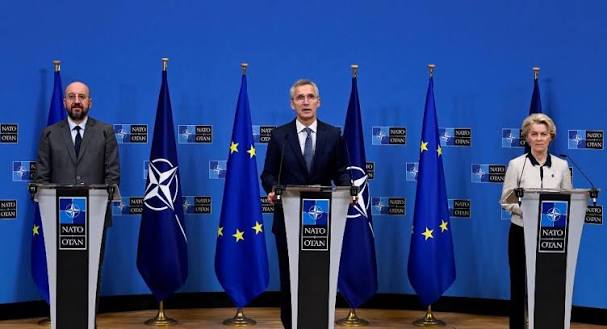
For years, "strategic autonomy" has been the European Union's most invoked and least defined ambition. Everyone endorses it; no two capitals mean the same thing by it. For some it is a call to build genuine independent capability; for others a rhetorical hedge against the day an ally proves unreliable. The ambiguity has been useful — and it is running out of room.
The Union is, by construction, a machine for turning twenty-seven national interests into one position, and on questions of hard security that machine strains hardest. Foreign and defence policy remain largely the preserve of member states, each with its own history, its own threat map and its own red lines. Autonomy asks these governments to pool the very sovereignty they were most reluctant to share in the first place. That reluctance is not stubbornness but a rational fear of being bound to a collective decision one did not fully control, and no amount of strategic rhetoric dissolves it until the trust to act together has actually been built.
Autonomy from whom, and for what?
The phrase conceals a genuine disagreement. States on the Union's eastern flank see the transatlantic alliance as the irreplaceable guarantor of their security and treat talk of autonomy as a dangerous distraction. States further west see dependence on a single external protector as a strategic vulnerability to be reduced over time.
Both readings are coherent; they are also in tension. A Union that cannot decide whether autonomy means complementing its alliance or insuring against it will struggle to build the industrial and military capacity that either reading requires.
The economic dimension of sovereignty
Autonomy is not only about troops and weapons. The Union has discovered, through a series of shocks, how exposed it is in energy, critical minerals, semiconductors and the payment systems that underpin trade. Dependence in any of these can be turned into pressure, and reducing it has become as central to the autonomy debate as any question of defence.
Here the Union has real instruments — a vast single market, a powerful currency, regulatory reach that shapes global standards. The challenge is to wield economic weight as a strategic tool without abandoning the openness that generated the weight in the first place.
Capability follows political will
Strategic autonomy is often discussed as a budgetary or industrial problem — more defence spending, more joint procurement, a deeper technology base. Those are necessary, but they are downstream of a prior question the Union keeps deferring: is it willing to accept the risks, and the sovereignty trade-offs, that acting together actually entails?
Capability without the political will to use it is a stockpile, not a strategy. The harder work is not building the tools but agreeing on the circumstances in which the Union would pick them up.
The enlargement question returns
The Union now contemplates further enlargement to its east and south, and the prospect throws the autonomy debate into sharp relief. Admitting new members reshapes the internal balance, tests decision-making rules built for a smaller club, and extends the Union's frontiers toward regions of active instability. Widening and deepening pull in opposite directions, and the Union has never fully reconciled them.
A larger Union could carry more weight in the world or could dilute its capacity to act, depending entirely on whether enlargement is matched by reform of how decisions are made. The autonomy the Union seeks abroad will be constrained, in the end, by the coherence it can maintain at home.
Europe's dilemma is not a lack of resources but a surplus of unresolved intentions. Autonomy will remain a slogan until the Union decides what it is for — and that decision, repeatedly deferred, grows more urgent each time the world declines to wait for Europe to make up its mind.
Dr. Elena Marchetti
Senior fellow in international security; former adviser on multilateral affairs.