
Reforming the Security Council: Ambition Meets Arithmetic
Everyone agrees the UN Security Council should change. Almost no one agrees on how — and the veto guards the door.
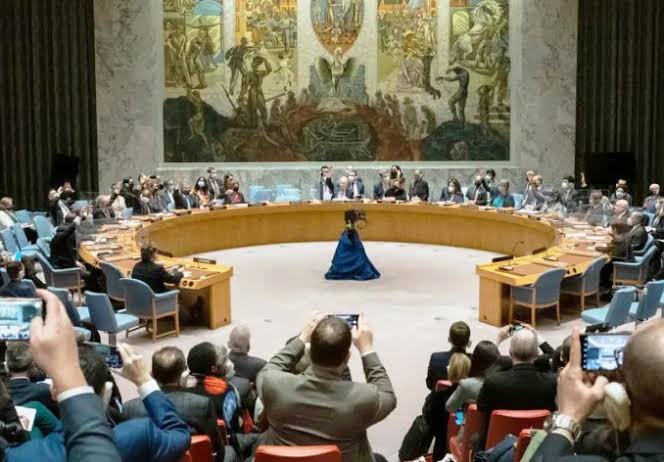
The case for reforming the UN Security Council is so widely accepted that it has become a kind of diplomatic background noise. A body whose permanent membership reflects the settlement of 1945 governs a world that has been remade several times over. And yet reform never comes, because the same feature that makes the Council powerful also makes it nearly impossible to change.
The gap between the Council's composition and the world's distribution of power grows more conspicuous each year. Entire regions that are now central to global affairs hold no permanent seat, while the settlement of a war that ended eight decades ago remains frozen into the institution's core. Every fresh crisis the Council handles poorly renews the argument — and every renewal ends in the same impasse. The pattern has repeated so often that cynicism has become its own obstacle, persuading many governments that the effort is not worth the disappointment it reliably produces.
The veto is the lock and the key
Any amendment to the Charter that would alter the Council requires the concurrence of the five permanent members. That means the states most advantaged by the current arrangement hold a veto over any attempt to dilute their advantage. Reform must be approved by precisely those who have the most to lose from it.
This is not a flaw that better diplomacy can engineer around; it is the structure working as designed. The founders traded universal legitimacy for great-power buy-in, calculating that a Council the strong could dominate was better than a Council the strong would ignore.
The competition among the aspirants
Even if the permanent members could be persuaded, the contenders for new seats cannot agree among themselves. Regional rivals block one another's candidacies as fiercely as any incumbent defends its privilege; for many states, denying a neighbour a permanent seat matters more than securing representation for the region as a whole.
This second layer of deadlock is often overlooked, but it is decisive. Reform requires not only the assent of those who hold power but a settlement among those who want it — and the aspirants have proved no more capable of that than the incumbents have been willing to share.
Legitimacy versus effectiveness
Proposals to expand membership promise a more representative Council, but representativeness and decisiveness pull against each other. A larger body speaks for more of the world and acts more slowly. Every seat added is a veto point, formal or informal, on collective action.
The more promising path may be incremental: constraining the use of the veto in cases of mass atrocity, improving transparency, and strengthening the bodies around the Council rather than staking everything on a grand redesign that the arithmetic will not permit.
Power leaks to other rooms
When an institution ossifies, influence does not wait; it migrates. States frustrated by the Council increasingly route their business through regional organisations, ad hoc coalitions and the General Assembly, where no veto applies. Each workaround chips at the Council's monopoly on legitimacy, even as its formal authority remains untouched.
This gradual redistribution may prove more consequential than any amendment. An institution can survive being unrepresentative for a long time, but it cannot survive being bypassed. The real threat to the Council is not a failed reform vote but a slow slide into irrelevance as the world learns to decide important things elsewhere.
Reform will come, if it comes at all, through accumulated practice rather than a single dramatic vote. The Council changes the way institutions usually change — slowly, unevenly, and only when the powerful conclude that the cost of standing still has finally exceeded the cost of moving. That threshold may be closer than the current paralysis suggests, for legitimacy, once lost, is far harder to rebuild than it is to preserve.
Dr. Elena Marchetti
Senior fellow in international security; former adviser on multilateral affairs.