
Pipelines, Ports and the Geopolitics of Energy
Infrastructure is destiny. The routes that carry gas, oil and data increasingly carry political influence with them.
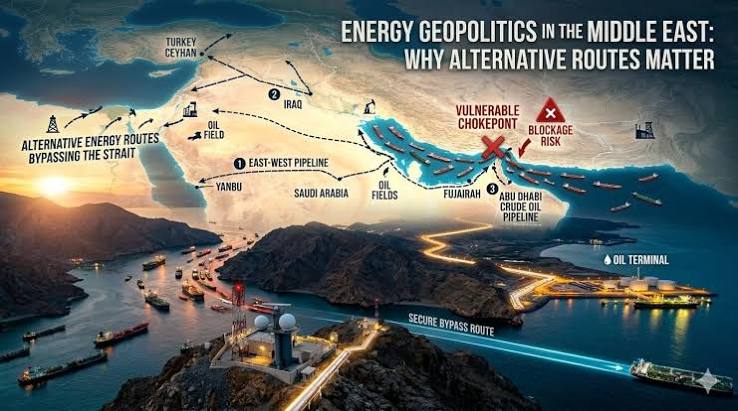
Energy has always been more than a commodity; it is a form of leverage that travels through physical infrastructure. A pipeline is a decades-long political commitment poured into steel, and a port is a chokepoint that its controller can open or close. To map the world's energy routes is to map its dependencies — and dependencies are where power quietly accumulates.
What makes energy infrastructure such a potent instrument is its permanence. A trade agreement can be renegotiated and a tariff repealed overnight, but a pipeline laid across a thousand kilometres of territory commits its parties for thirty years. The sheer immovability of the asset is the point: it converts a commercial transaction into a structural relationship that outlives the governments that signed it. A leader can disown a predecessor's promises, but not a predecessor's pipelines, and that permanence is precisely why the routes are fought over with an intensity the underlying commodity rarely warrants.
The map is the strategy
When a country builds a pipeline to a neighbour, it is not only selling fuel; it is binding a customer to a supplier for a generation and shaping the customer's foreign policy in ways no treaty could. The direction of a pipe is a statement about which relationships a state intends to deepen and which it is prepared to do without.
This is why energy infrastructure attracts such fierce diplomacy. The contest is rarely about the marginal price of a barrel; it is about who will hold the valve, and what they will be able to ask for when they do.
Chokepoints and the tyranny of geography
A handful of straits and canals carry a disproportionate share of the world's traded energy, and whoever can threaten them holds leverage out of all proportion to their size. The vulnerability of these passages shapes naval strategy, alliance politics and the price of insurance in ways most consumers never see but every planner obsesses over.
States that depend on a single passage have every incentive to build around it — new overland routes, alternative ports, strategic reserves — and those workarounds are themselves acts of foreign policy, redrawing the map of who needs whom. Geography sets the initial terms, but capital and diplomacy are always trying to renegotiate them.
Diversification is the counter-move
The defence against energy leverage is redundancy — more suppliers, more routes, more storage, and the flexibility to switch between them. The recent scramble in Europe to replace a single dominant supplier was, at bottom, a lesson in the cost of having neglected that redundancy for years.
The transition to cleaner energy adds a new layer rather than erasing the old one. Critical minerals, grid interconnectors and data cables are becoming the pipelines of the next era, with their own chokepoints and their own geopolitics of control.
The wires are the new pipelines
The logic that governs oil and gas is spreading to everything that moves through fixed infrastructure. Undersea data cables carry the traffic of the global economy along a handful of vulnerable routes; electricity interconnectors bind neighbours as tightly as any gas line; the supply of processed minerals for batteries runs through a few dominant refiners. Each is a dependency waiting to be politicised.
The states thinking furthest ahead are treating this new infrastructure with the strategic seriousness once reserved for oil — mapping the chokepoints, diversifying the routes, and asking who would control the flow in a crisis. The commodities change; the geopolitics of who holds the valve does not.
Whoever builds the infrastructure writes the rules that run along it. Energy policy, properly understood, is foreign policy conducted by other means, and the state that treats it as a mere matter of price will keep being surprised by the politics that travel down the pipe.
Rafael Ortiz
Contributing writer on trade, energy and the political economy of statecraft.