NATO After Enlargement: A Larger Alliance Is Not a Stronger One
Adding members is the easy part. The next decade will test whether the alliance can convert breadth into cohesion, and cohesion into credible deterrence.
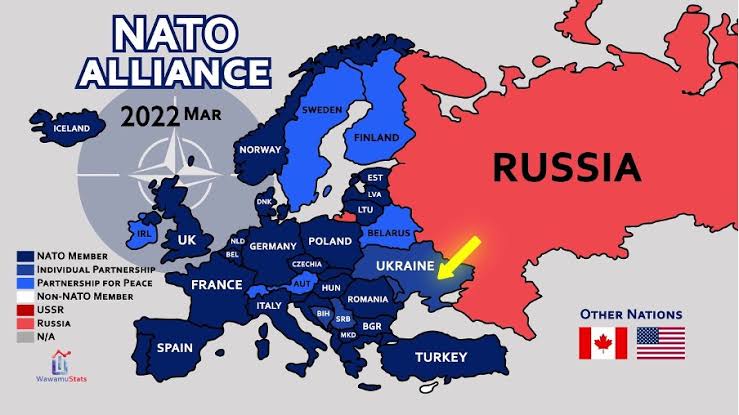
Enlargement has always been NATO's clearest expression of success — a queue of states asking to join is a rare thing for any institution. But the reflex to equate size with strength misreads how alliances actually deter. A coalition is only as credible as its least resolved member, and every accession widens the range of interests that must be reconciled before the alliance can act.
There is a temptation, understandable after a period of rapid growth, to treat the map as the mission accomplished. Yet a security guarantee is not a membership certificate; it is a standing promise to bleed for someone else's border. Extending that promise is the beginning of an obligation, not the end of one, and the obligation has to be resourced long after the flags are raised. The gap between a guarantee written on paper and one backed by deployable force is exactly the gap an adversary is trained to probe, and closing it is the work of years rather than of a single summit.
The burden-sharing question refuses to die
For seventy years, the United States has underwritten European security while European capitals debated how much of their own defence they could responsibly neglect. Enlargement does not resolve this; it multiplies the number of governments making the calculation. Each new member arrives with its own threat perception, its own defence budget, and its own theory of what the alliance is for.
Cohesion, not headcount, is the scarce resource. An alliance that cannot agree on what it is deterring, or how far it will go to do so, projects exactly the ambiguity an adversary is trained to exploit.
The industrial base is the hard constraint
Deterrence is not only a matter of political will; it is a matter of magazines, munitions and the factories that refill them. A decade of treating defence as a discretionary expense has left much of the alliance with impressive doctrine and shallow stockpiles. Recent experience has been a blunt reminder that wars consume matériel faster than peacetime economies produce it.
Rebuilding that capacity is slower and less visible than adding members, and it competes with every other claim on a national budget. But an alliance that cannot sustain a fight for more than a few weeks is deterring on credit, and adversaries can read a balance sheet as well as a communiqué.
Deterrence is a promise that must be believed
The credibility of a security guarantee lives in the mind of the adversary, not in the text of a treaty. Article 5 deters only if a potential aggressor believes it will be honoured — and belief is built through forward presence, exercises, and the visible political will to accept risk.
That is the real work of the coming decade: turning a broader map into a deeper commitment. It means hard conversations about where forces sit, who pays for them, and which contingencies the alliance is actually prepared to fight.
Geography changes the maths
Each accession does more than add a flag to the map; it lengthens the border the alliance must be prepared to defend and reshapes the geometry of any contingency. A frontier that was once someone else's problem becomes a collective one, with all the planning, positioning and expense that implies. The commitment is not abstract — it has coordinates.
That is why the serious debates inside the alliance are about basing, logistics and reinforcement timelines rather than communiqués. Defending a longer perimeter credibly requires forces that can arrive before a fait accompli is complete, and building that capacity is the unglamorous substance of which real deterrence is made.
A larger NATO can be a stronger NATO. But that outcome is a choice, not a consequence — and it will be decided by defence ministries and legislatures, not by the ceremony of accession.
Dr. Elena Marchetti
Senior fellow in international security; former adviser on multilateral affairs.